Luxury hospitality is increasingly about creating unforgettable experiences, and one of the most compelling strategies in recent years has been the revival of Baroque design. From ornate baroque dining sets to gilded mirrors and dramatic chandeliers, this bold aesthetic combines opulence with visual storytelling, making spaces that photograph beautifully and generate press attention. For luxury hotel brands in Europe, carefully integrating Baroque elements into modern interiors allows for a balance between grandeur and contemporary comfort.
The Allure of Baroque in Hospitality
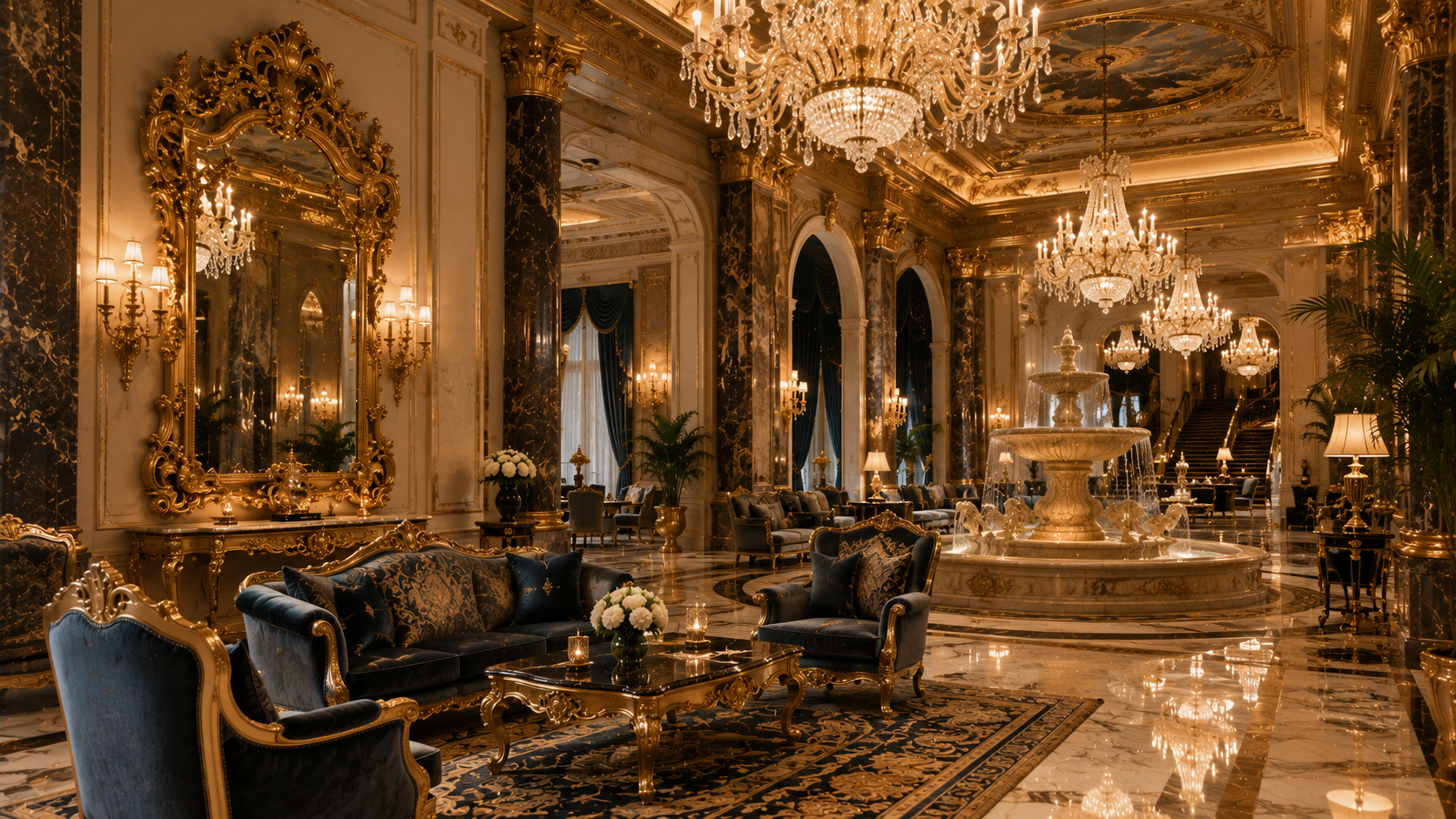
Baroque design, historically associated with palaces and European aristocracy, has found renewed relevance in luxury hospitality. Its hallmark features—curved forms, intricate carvings, lavish materials, and dramatic lighting—can transform standard hotel interiors into visually immersive environments. Integrating luxury hotel interior design with Baroque elements communicates exclusivity, craftsmanship, and timeless elegance.
- Furniture as Statements: Baroque dining sets and seating arrangements create a focal point in restaurants and suites, signalling sophistication while enhancing social interaction.
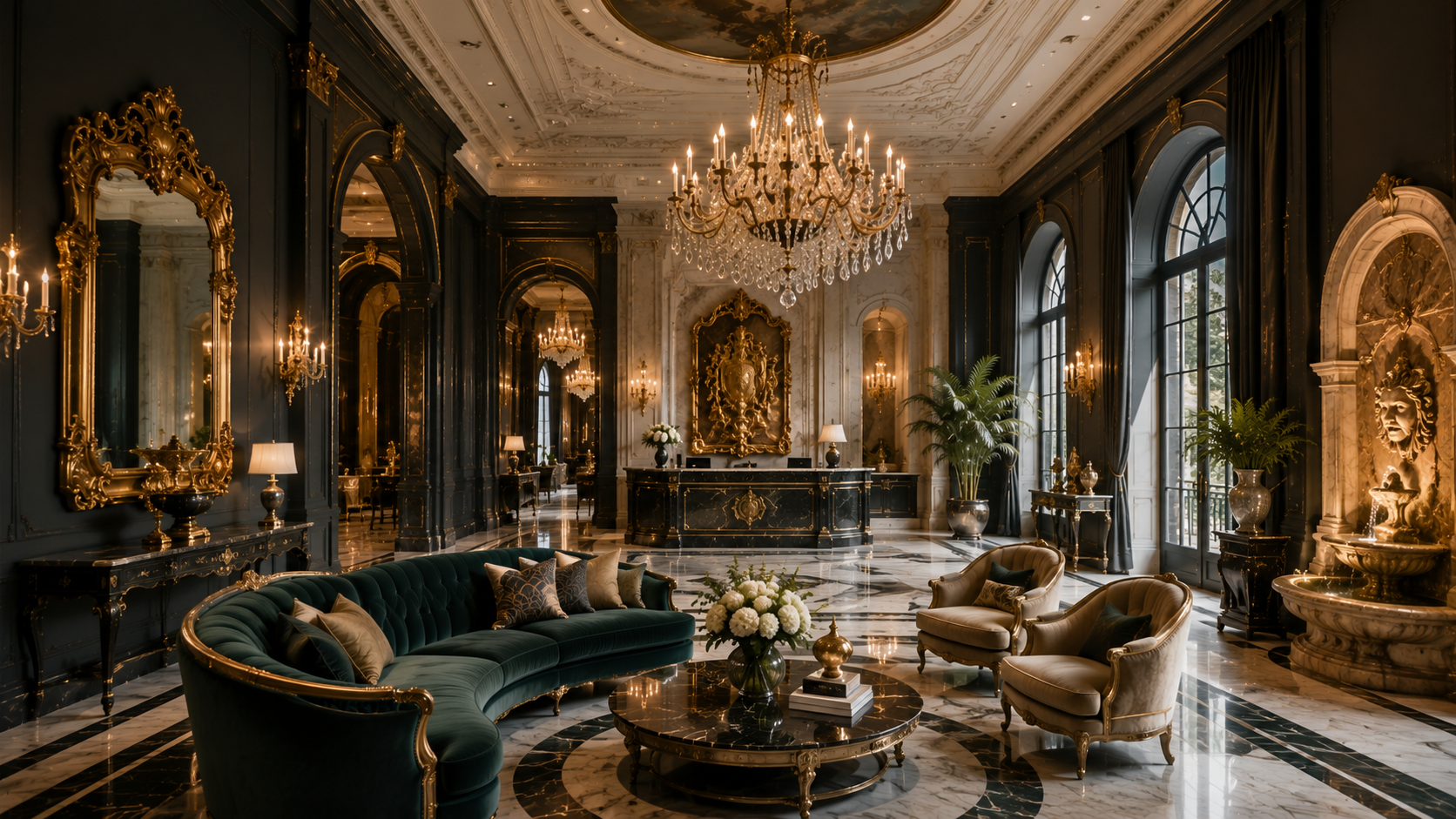
- Reflective Surfaces: Baroque mirrors amplify light and space, contributing to the room’s opulence while reinforcing symmetry and proportion.
- Lighting Drama: Chandeliers, wall sconces, and candle-style fixtures with gilded finishes offer both illumination and visual spectacle.
Balancing Ornate and Contemporary
A successful Baroque revival in a modern hotel requires careful curation. Too much ornamentation can overwhelm, while too little dilutes the effect. Designers focus on creating a dialogue between traditional Baroque motifs and modern architectural elements.
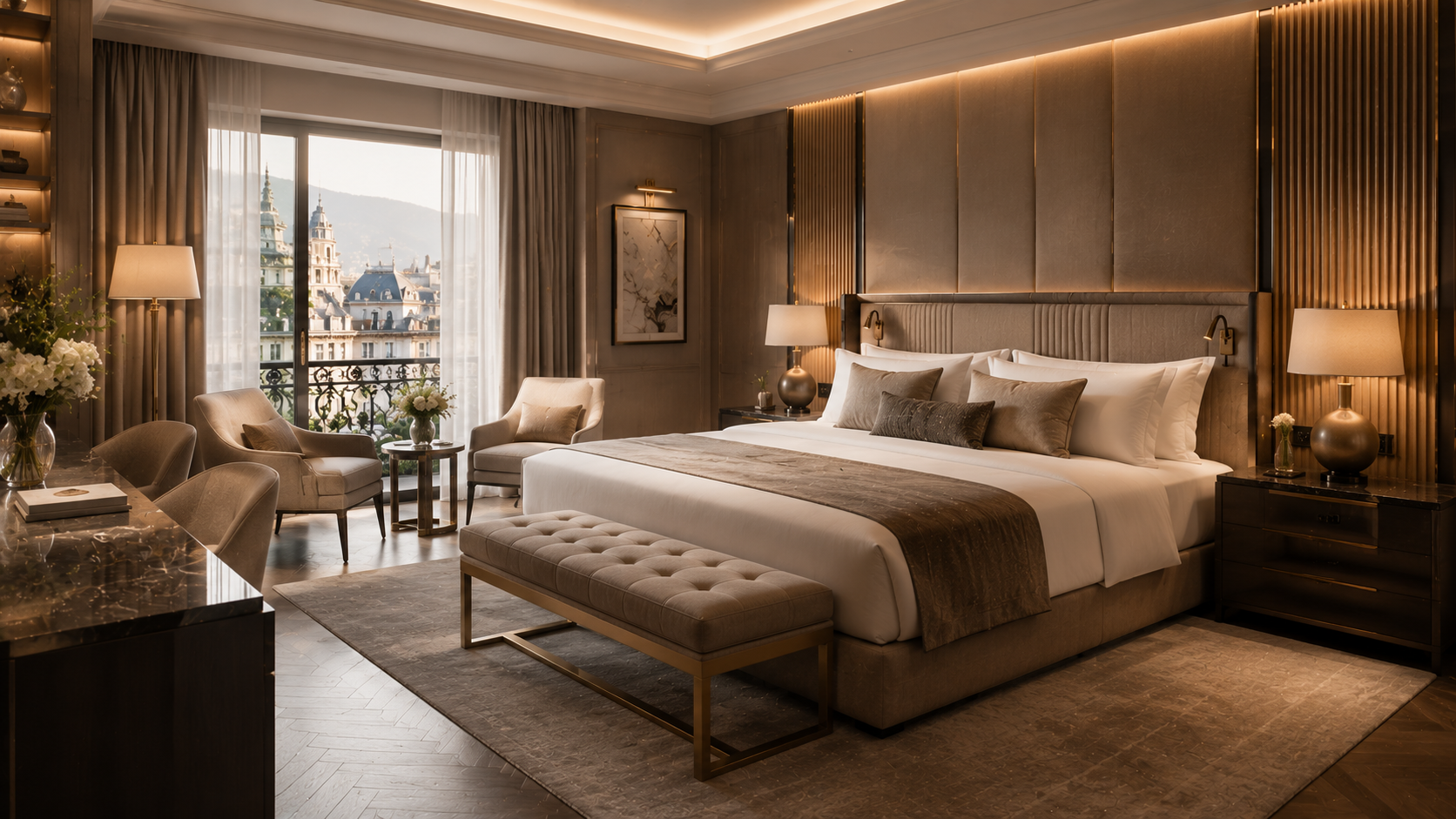
- Material Contrasts: Polished marble, brushed metals, and soft textiles juxtapose ornate carvings and gilding to prevent visual heaviness.
- Strategic Placement: Signature pieces like baroque fountains or statement mirrors are positioned to guide attention without cluttering the space.
- Colour Palettes: Neutral backgrounds, soft lighting, and subtle accent colours highlight the richness of gold, bronze, and deep woods typical of Baroque design.
Furniture, Mirrors, and Accessories as a System
In luxury hotel interiors, Baroque design must function as a cohesive system rather than isolated accents. Coordinating furniture, mirrors, lighting, and decorative accessories ensures continuity and reinforces brand identity.
- Seating and Dining: Luxurious chairs and tables with sculpted details harmonize with mirrors and chandeliers.
- Mirrors and Art: Reflective surfaces amplify light and create an expansive feel, making public areas and suites appear grander.
- Fountains and Sculptural Elements: Small-scale Baroque fountains or sculptural accents provide visual anchors and a sense of place, enhancing the overall experience.
Why This Approach Works
Luxury hotels that successfully implement Baroque elements differentiate themselves in a crowded market. Bold interiors that remain balanced resonate with guests, attract social media attention, and generate editorial coverage. Luxury hotel decoration rooted in Baroque revival tells a story of heritage, sophistication, and curated luxury that standard modern interiors often lack.
- Photogenic Spaces: Baroque interiors photograph exceptionally well, enhancing brand visibility in press and social channels.
- Guest Experience: The tactile richness, visual depth, and dramatic lighting contribute to a memorable stay.
- Longevity: Timeless Baroque motifs, when integrated thoughtfully, endure design trends and maintain value over time.
Final Thought
In conclusion, adopting Baroque design in modern luxury hotels is more than a decorative choice—it is a strategic statement. By balancing ornate elements with contemporary simplicity, curating furniture, mirrors, lighting, and decorative accessories as a unified system, hoteliers can create interiors that are regal, photogenic, and unforgettable. For European hotels seeking a distinct identity, the Baroque revival offers a pathway to timeless elegance and bold interior storytelling.